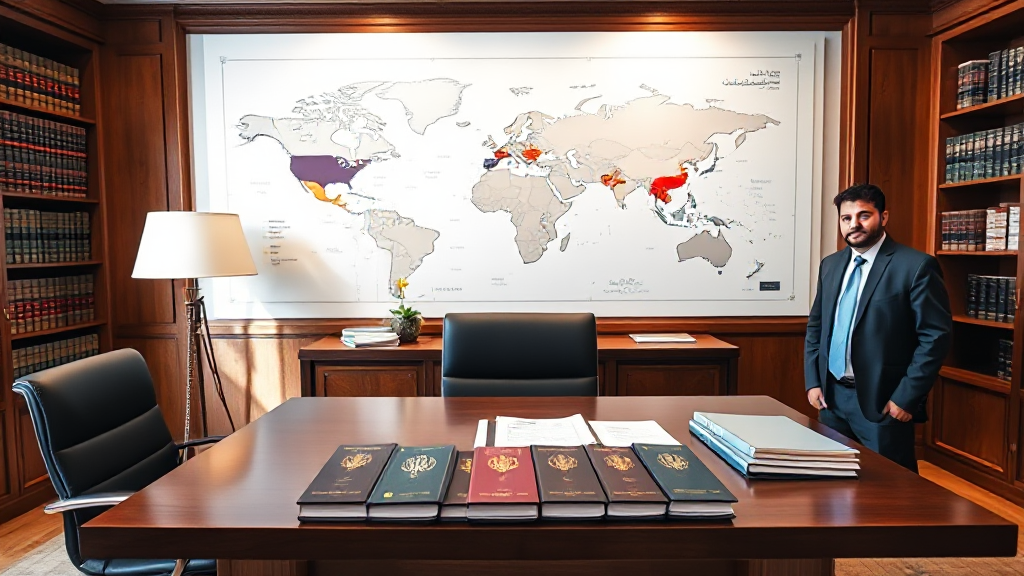
7 Dual Citizenship Iran Risks That Catch People Off Guard
Dual citizenship involving Iran carries real legal exposure, and most of it comes from a single fact: Iran does not recognize a citizen’s voluntary renunciation of Iranian nationality in the way many Western countries do. If you were born to an Iranian father, or in some cases an Iranian mother, Iranian law may treat you as a national regardless of the passport you carry, the oath you took, or the decades you have spent abroad. That single legal position creates a chain of downstream problems. Below are the seven risks I see most often when reviewing files, each paired with the fix that actually works.
For a structured legal overview of how these rules interact, the team at dual citizenship Iran risks has published a jurisdiction-by-jurisdiction breakdown that is worth reading before you make any travel or investment decision.
1. Iran May Still Consider You a Citizen, Even If Your Other Passport Says Otherwise
The foundational risk is attribution. Under Iranian law, nationality is generally transmitted through the father, and a child born to an Iranian father is considered Iranian from birth. Acquiring another citizenship later does not automatically extinguish that status. Iranian authorities have historically treated dual nationals as Iranian citizens for purposes of entry, exit, military service, and criminal jurisdiction.
This matters because the protections you expect from your second passport — consular access, diplomatic intervention, extradition safeguards — may not apply once you are inside Iran. Foreign ministries in several countries have publicly warned that their ability to assist dual nationals in Iran is severely limited.
The fix: Before any travel, obtain a written legal opinion on your specific nationality status under Iranian law, not a general summary. Parentage, date of birth, and whether any prior renunciation was formally processed all change the answer. Do not assume that holding a foreign passport at the border resolves the question.
2. Exit Bans and Travel Restrictions Can Appear Without Warning
The second risk is mobility. Iranian courts and administrative bodies can issue exit bans, sometimes in connection with civil disputes, financial claims, or unresolved obligations that have nothing to do with criminal matters. A dual national who enters Iran on an Iranian document, or who is treated as Iranian on arrival, can find that departure is not guaranteed.
This is not a theoretical concern. Exit bans have been used in commercial disputes, family law cases, and inheritance conflicts. The person affected often learns about the ban only at the airport.
The fix: If you have any unresolved financial, family, or property matter in Iran, resolve it or document its status before travel. Where travel is unavoidable, arrange legal representation inside Iran in advance and confirm in writing whether any restriction exists against your name. Never book a one-way itinerary assuming you can extend your stay.
3. Military Service Obligations Do Not Disappear With a Second Passport
Conscription is one of the most common traps. Iranian males may face military service obligations, and the exemption rules for those who have lived abroad are specific and conditional. Simply holding a foreign passport does not create an exemption. In some cases, the obligation follows the person for years and surfaces at the worst possible moment — during a family visit, a business trip, or a transit stop.
There are lawful routes to resolve or defer the obligation, but they depend on age, education, residency history, and whether the person ever held an Iranian exit permit. The rules have also been adjusted over time, so older assumptions are unreliable.
The fix: Get a service-status determination before you travel, and do it through a lawyer rather than a relative’s informal inquiry. If an exemption or deferral applies, obtain the documentation that proves it and carry a certified translation. Do not rely on a verbal assurance at the airport.
4. Dual Nationality Is Not Formally Recognized Inside Iran
Iran does not generally recognize dual nationality as a legal category. That means Iranian authorities may treat you exclusively as an Iranian citizen for domestic purposes, even while your other country treats you as its national. The two legal systems do not reconcile, and you are caught in the gap.
Practically, this affects detention, court proceedings, property ownership, and even routine administrative tasks. A foreign passport may be treated as an identity document rather than a claim to foreign protection.
The fix: Plan around the gap rather than trying to argue your way through it. Keep certified copies of all identity documents, including any Iranian birth certificate or national ID card, in a secure place outside Iran. If you hold Iranian documents you no longer wish to use, get advice on whether surrendering them helps or hurts your position — the answer is not the same for everyone.
5. Renouncing Iranian Citizenship Is Harder Than Most People Expect
Many people assume they can simply renounce Iranian citizenship the way they might renounce another nationality. In practice, renunciation requires government approval, and approval is not automatic. Iran has historically restricted renunciation in ways that can leave a person in limbo: formally a citizen for Iranian purposes, but with no practical ability to exercise or escape the status.
There is also a family dimension. Renunciation can affect inheritance rights, property claims, and the status of minor children. A decision that looks clean on paper can create complications for relatives who remain in Iran.
The fix: Treat renunciation as a legal project, not a form. Confirm eligibility, understand the consequences for property and inheritance, and get advice on timing — especially if minor children are involved. Where renunciation is not available, focus on managing the risks rather than eliminating the status.
6. Second Citizenship by Investment Does Not Erase the Iranian Connection
This is where a lot of investors go wrong. Acquiring citizenship in a Caribbean jurisdiction, Turkey, or a European country through an investment program gives you a genuine second nationality — but it does not automatically cancel Iranian nationality in Iran’s eyes. The new passport changes your travel options and your tax planning; it does not change how Iranian authorities classify you.
That said, a second citizenship can still be valuable. It can provide a safe alternative residence, improve visa-free travel, and create a legal buffer if your situation in Iran deteriorates. The mistake is treating it as a cure rather than a tool.
The fix: Choose the second jurisdiction with the Iranian rules in mind, not just the investment threshold. Some programs have better track records for clients with Iranian background, and some create reporting or banking complications. Confirm the interaction between your new nationality and your Iranian status before you commit capital.
7. Banking, Property, and Inheritance Problems Follow You Abroad
Even if you never return to Iran, the Iranian connection can surface in financial and property matters. Banks in some jurisdictions apply enhanced due diligence to clients with Iranian links, which can slow account opening or trigger reviews. Property held in Iran may be difficult to sell, transfer, or inherit without local representation. Inheritance rules under Iranian law can differ sharply from what your other country’s law provides, particularly regarding shares for daughters and non-Muslim heirs.
These issues rarely resolve themselves. They tend to compound quietly until a triggering event — a death in the family, a sale, a tax inquiry — forces the matter.
The fix: Audit your exposure now. List every Iranian asset, account, and document. Get a local lawyer to confirm ownership and transferability. Where inheritance is a concern, consider whether a will or a trust in your country of residence can work alongside Iranian rules, and get advice on how the two interact.
How to Reduce These Risks Before They Become Problems
The pattern across all seven risks is the same: the danger comes from assumptions. People assume their foreign passport protects them, assume their service obligation lapsed, assume renunciation is straightforward, assume a second citizenship resets everything. Each assumption is reasonable in a generic immigration context and unreliable in an Iranian one.
A workable approach has four parts. First, establish your actual legal status under Iranian law with a written opinion. Second, document everything — birth certificates, national ID, service status, property titles, and any prior renunciation filings. Third, get local representation inside Iran for any matter that could trigger an exit ban or a court claim. Fourth, coordinate your second-citizenship planning with your Iranian exposure rather than treating them as separate projects.
None of this requires you to give up travel, family ties, or business interests in Iran. It requires you to stop treating the Iranian side of your identity as a formality. The legal systems do not reconcile, so you have to manage the gap deliberately.
If you are weighing a second citizenship and want to understand how it interacts with Iranian nationality rules, a consultation with a firm that handles both sides of the equation is the fastest way to avoid the mistakes described above. The cost of a legal review is trivial compared to the cost of discovering an exit ban at the airport or an inheritance dispute years later.
Frequently Asked Questions About Dual Citizenship and Iran
Can I lose my Iranian citizenship automatically by becoming a citizen of another country?
No. Acquiring another nationality does not automatically terminate Iranian nationality. Iran generally treats the person as an Iranian citizen regardless of the second passport. Formal renunciation requires government approval and is not guaranteed.
Will my foreign passport protect me if I am detained in Iran?
Not reliably. Iran does not recognize dual nationality for domestic legal purposes, and several foreign governments have stated that consular assistance for dual nationals in Iran is extremely limited. You should not count on your second passport as a safeguard.
Does a second citizenship by investment remove the risks of Iranian nationality?
It does not remove them, but it can reduce your exposure. A second citizenship gives you an alternative residence and travel document, which is useful if your situation changes. It does not change how Iranian authorities classify you, so the underlying risks remain unless you address them directly.
What should I do before traveling to Iran as a dual national?
Get a written legal opinion on your nationality and military service status, confirm whether any exit ban or unresolved claim exists against you, arrange local legal representation, and carry certified copies of all relevant documents. Do not rely on informal assurances from relatives or airline staff.